|
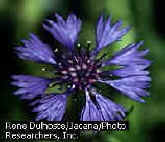
Cornflower
|
The cornflower is a branching annual cultivated for its
attractive blue, pink, purple, red, or white flowers. A frost-hardy species,
the cornflower grows well in sunny locations with well-drained soils.
Rene Dulhoste/Jacana/Photo Researchers, Inc.
|
|
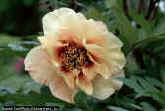
Peony
|
The peony, which belongs to the Paeonia genus, is a
common garden plant with a number of varieties and cultivars. In the wild it
is found in the temperate regions of the Northern hemisphere.
Bonnie Sue/Photo Researchers, Inc.
|
|
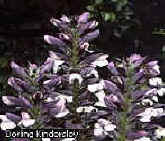
Acanthus
|
The acanthus, commonly called bear’s-breeches, is
cultivated for its ornamental leaves and large flowers. The plant is native
to southern Europe, thriving in rich, well-drained soils and full sunlight.
Dorling Kindersley
|
|
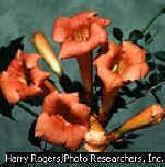
Trumpet Creeper
|
The trumpet creeper, characterized by small clusters of
trumpet-shaped flowers, is a woody-stemmed root climber that grows best in
sunny, fertile, moist, well-drained soils. It reaches 7 to 12 m (22 to 40
ft) in height.
Harry Rogers/Photo Researchers, Inc.
|
|
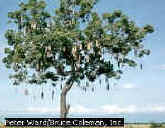
Sausage Tree
|
The sausage tree of the Bignonia family is native to Africa
and named for its unusual sausage-like fruits. The woody capsules can be up
to 45 cm (18 in) long, 10 cm (4 in) wide, and weigh up to 5 kg (12 lb). The
fruit takes a year to ripen and is inedible, but is often used in folk
remedies for skin conditions.
Peter Ward/Bruce Coleman, Inc.
|
|
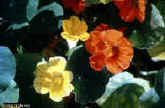
Garden Nasturtium
|
The garden nasturtium, Tropaeolum majus, is mainly
cultivated for its attractive flowers. The nasturtium originally came from
South America.
Dorling Kindersley
|
|
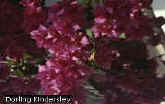
Bougainvillea
|
The showy display of bougainvillaeas is due to three large,
brightly coloured bracts that surround each group of inconspicuous flowers.
Many hybrids of bougainvillaea have been cultivated for their ornamental
value, including two varieties with multiple bract colours on a single plant.
Dorling Kindersley
|
|
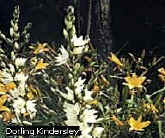
Yucca
|
The yucca (foreground), a member of the agave family, is
cultivated as an ornamental plant. Its bell-shaped white blossoms appear in
loose clusters from a flower stalk; the stem itself is quite short in many
species.
Dorling Kindersley
|
|
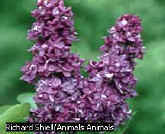
Common Lilac
|
The common lilac, a variety of which is seen here, is one of
a group of deciduous trees and shrubs grown primarily for their extremely
fragrant flowers. Originating in temperate Eurasia, the lilac is now
cultivated in temperate regions of the world in sunny locations with thick,
fertile, preferably alkaline soils.
Richard Shiell/Animals Animals
|
|
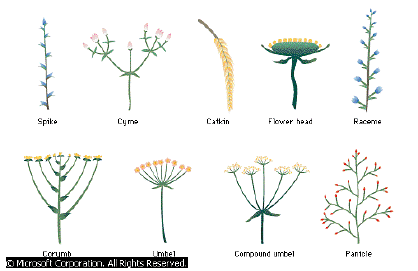
Type of Inflorescences
|
Each type of inflorescence (flower cluster) is identified by
the way the flowers are arranged on the stem.
© Microsoft Corporation. All Rights Reserved.
|