|
  
|
Monarch Migration

|
Large numbers of monarch butterflies, Danaus plexippus,
winter in the mountains west of Mexico City. This butterfly is known for its
extraordinarily long migrations between central Mexico and the
central-northern United States, which it makes once during its life span.
Scientists speculate that the mountainous climate provides a favourable
combination of moist air and cool, but not freezing, temperatures. These
conditions keep the butterfly from drying out and keep its metabolism low
enough to conserve fat stores but high enough to maintain life. The longest
recorded flight for a tagged adult monarch is 2,900 km (1,800 mi).
G. G. Dimijian/Photo Researchers, Inc.
|
|
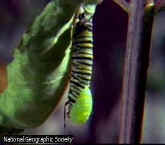
Monarch Butterfly Metamotphosis
|
A mature monarch butterfly caterpillar begins metamorphosis
by shedding its skin while hanging upside down. The yellowish pupa forms
beneath the skin and bursts through a split near the head of the
caterpillar. The split lengthens as the pupa emerges, casting off the old
skin. The pupa’s skin becomes a hard capsule, or chrysalis, in which it
remains until it has transformed into an adult butterfly. During the pupal
stage, hormones direct the breakdown of larval structures and the formation,
both from recycled cells and from cells inactive since the embryo stage, of
the new tissues of the butterfly. The butterfly’s orange and black striped
wings are visible through the chrysalis just before it emerges.
National Geographic Society
|
|
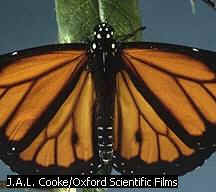
Monarch Butterfly
|
The monarch butterfly, Danaus plexippus, is a
colourful butterfly with one of the longest migratory patterns known for any
insect. Its success in the wild is due partly to its diet; monarch larvae
feed exclusively on milkweed plants, giving them a bitter taste undesirable
to birds and other insectivorous animals.
J.A.L. Cooke/Oxford Scientific Films
|
Web Links
Migration
Monarch
Butterflies
|
[ Intrepid and
Travelers] [Documentary] [Home] |


