|
  
|
Seaweed
|
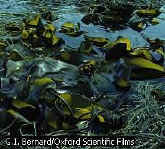
Algae and kelps represent the dominant plant species in the
intertidal zone. All of these plants have specialized adaptations that
protect them against drying when they are exposed during low tide. Most
types of kelp are edible and are considered a food staple in parts of the
world. Extracts from kelp and algae are used in the manufacture of ice cream
and certain types of cosmetics.
G.I. Bernard/Oxford Scientific Films
|
|
Red
Coralline Algae
|
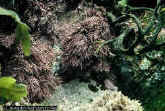
The red coralline algae belong to the phylum Rhodophyta.
They can incorporate calcium carbonate into their cell walls, giving the
body a rigid, segmented appearance and texture. Most of the red algae have
the ability to carry on photosynthesis at much greater depths than other
types of algae. Some species from the Bahamas grow at depths of nearly 270 m
(880 ft).
G.I. Bernard/Oxford Scientific Films
|
|
Green Algae
|
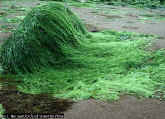
These green algae, shown here exposed at low tide, belong to
one of some 6,000 to 7,000 species of plants that make up the phylum
Chlorophyta. Organisms in this phylum may appear as single cells, amorphous
sheets, or collections of long filamentous strands. Although able to survive
in marine and fresh waters, damp soil, or snow and ice, most species are
found in freshwater habitats.
G.I. Bernard/Oxford Scientific Films
|
[Marine Life] [Documentary]
[Home] |


