|
   
|
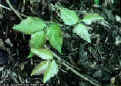
Poison Ivy
|
The characteristic three-leaflet structure of poison ivy
stands as a warning signal. Poison ivy produces resins that cause an
allergic reaction in most people and direct contact with the plant is not
required for irritation to occur. Indirect contact through contaminated
clothing or animals or with smoke from the burning plant will also produce
symptoms.
Scott Camazine/Photo Researchers, Inc.
|
|
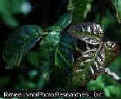
Poison Oak
|
Poison oak, a variety of Rhus toxicodendron, can be found
growing in North America as short shrubs or climbing vines. Contact with the
oily substance on the surface of its three shiny leaflets produces an
itching, burning, and blistering reaction.
Renee Lynn/Photo Researchers, Inc.
|
|
Mushroom and Toadstools
   
  
Information On
Mushrooms
|
|
Common Laburnum

|
Common laburnum is also known as golden chain, named for its
hanging clusters of small, yellow blossoms, which may be as long as 38 cm
(15 in). It is widely cultivated throughout the world despite the fact that
all parts of the tree are poisonous.
D. Donadoni/Bruce Coleman, Inc.
|
|
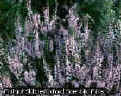
Ling
|
Heather, or ling, is a bushy evergreen shrub growing to a
height of 60 cm (24 in). The tiny pink or sometimes white flowers are
numerous and borne in long terminal racemes. The scale-like leaves are only
1-2 mm long. Cultivated forms have foliage ranging from green, yellow,
brown, and red to grey, white, and variegated.
Frithjof Skibbe/Oxford Scientific Films
|
|
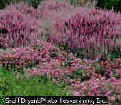
Heather
|
Assorted cultivars of the representative genus of the heath
family, Erica are seen here, together with Scotch heather (Calluna
vulgaris), a species found over much of the cool-temperate area of the
northern hemisphere.
Geoff Bryant/Photo Researchers, Inc.
|
|
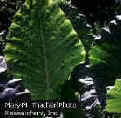
Elephant Ears
|
The name "elephant ears" applies to eight species
of giant rhizomatous herbs of the genus Colocasia whose leaves
measure up to 1 m (40 in) in length. The taro, also known as elephant ears,
dasheen, eddo, malanga, and yautia, is indigenous to tropical Asia. The
large, edible, underground tubers are made into puddings, breads, and poi,
and the massive leaves are eaten steamed or boiled. Both the tubers and the
leaves must be cooked in order to remove poisonous calcium oxalate, which
produces burning and swelling in the mouth and throat if eaten.
Mary M. Thacher/Photo Researchers, Inc.
|
|
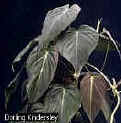
Philodendron
|
The philodendrons, a group of climbing plants native to
tropical America, are commonly cultivated as houseplants for their
attractive foliage.
Dorling Kindersley
|
|
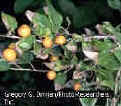
Orange Natal Strychnos Tree
|
Strychnos trees yield a varied crop of poison, medicine, and
food. Aboriginal groups use the bark and leaves of one species to make
curare, a paralysing poison used in hunting. Some species of the plant yield
a quinine-like medicine, and the fruit of the natal orange variety is
cultivated for commercial use.
Gregory G. Dimijian/Photo Researchers, Inc.
|
|
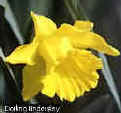
Wild Daffodil
|
The wild daffodil, a bulbous herb native to the eastern
hemisphere, is widely cultivated for its bright yellow flowers. The daffodil
is a common member of the genus Narcissus; plants of this genus are
among the first to bloom, flowering in the early spring.
Dorling Kindersley
|
|
Common Poisonous Plants
|
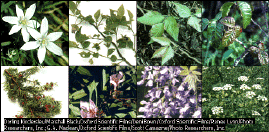
As many as one per cent of all plant species may be toxic to
human beings and animals, their effects ranging from skin irritation to
hallucinations, bone marrow destruction, paralysis, vomiting, and heart
failure. Poisonous plants occur in all habitats and many cultivated gardens.
Common varieties include (top, left to right) star-of-Bethlehem,
deadly nightshade, poison ivy, poison oak; (bottom) yew, oleander,
wisteria, and poison hemlock.
Dorling Kindersley/Marshall Black/Oxford Scientific Films/Deni
Bown/Oxford Scientific Films/Renee Lynn/Photo Researchers, Inc.;G.A. Maclean/Oxford
Scientific Films/Scott Camazine/Photo Researchers, Inc.
|
[Documentary] [Home] |


